
What VacuumTested is
VacuumTested is an independent product research site that catalogs and compares consumer electronics and home appliances — robot vacuums, air purifiers, televisions, projectors, 3D printers, laser engravers, smart rings, self-cleaning litter boxes, IPL hair removal devices and dash cams — using listed specifications and Amazon buyer feedback rather than hands-on laboratory testing.
Guide facts
- Guide type
- Informational buying and maintenance guidance
- Audience
- Robot vacuum owners and buyers
- Evidence standard
- Published testing methodology and model-level review data
How to use this page
- Start with the section that matches your question or household situation.
- Use the linked reviews and best-of lists to compare specific models.
- Recheck current product details before acting on time-sensitive information.
Product examples
What these features look like
These current catalog examples show the product types discussed on this page. Use the linked reviews to check model-specific scores, use cases, and trade-offs.
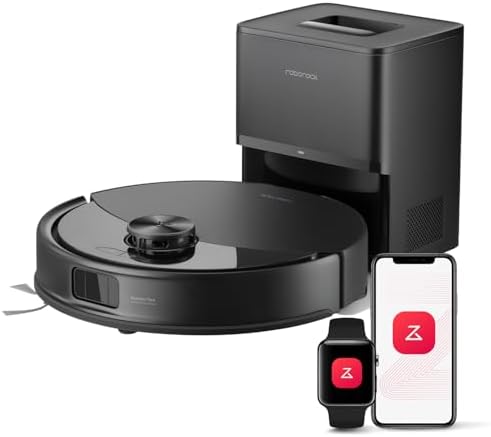
Roborock catalog example
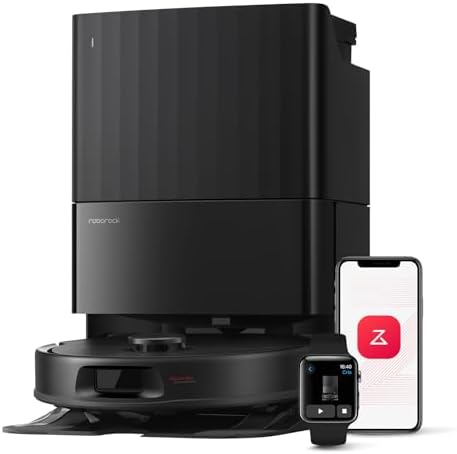
Roborock catalog example
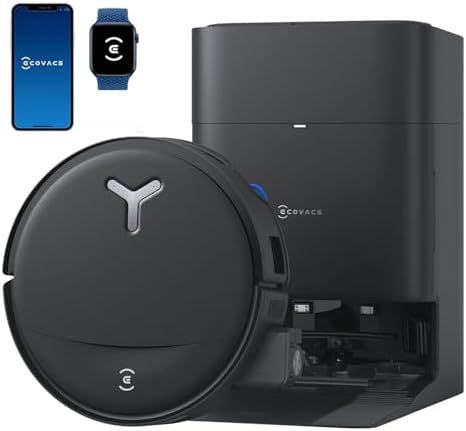
Ecovacs catalog example
Robot vacuum pricing is not linear, and the gap is wider than most buying guides admit. Across the 78 models we track from five brands, stated suction and price move in the same direction only loosely, and two models can publish an identical figure while sitting hundreds of dollars apart.
What this page is: a comparison of published catalogue figures — retail price and each manufacturer's own stated suction. It is not a laboratory test. Where a listing does not publish a Pa figure, that model is excluded from the suction columns rather than estimated.
What does each price band actually buy?
The catalogue spans $140 to $1,700, with a median of $540 across 77 priced models. Average editorial score rises with price, but slowly — the table below is the whole argument on one screen.
| Price band | Models | Range | Average score |
|---|---|---|---|
| Under $300 | 10 | $140–$280 | 8.27/10 |
| $300–$600 | 36 | $304–$599 | 8.63/10 |
| $600–$1,000 | 22 | $650–$1,000 | 8.88/10 |
| $1,000 and up | 9 | $1,100–$1,700 | 9.34/10 |
Read the first and last rows together. The cheapest band and the most expensive band are separated by more than three times the money, and by well under one point of editorial score. The extra spend buys dock automation, build materials, mopping hardware and accessories — things this page does not measure — rather than a proportionally better clean.
Does the same suction cost the same money?
No, and this is the clearest number on the page. Group every model by its published suction figure and the prices inside a single group spread widely:
| Stated suction | Models | Cheapest | Most expensive | Spread |
|---|---|---|---|---|
| 20,000 Pa | 6 | Dreame D20 Air Plus $200 | Dreame X50 Ultra Complete $900 | 4.5× |
| 10,000 Pa | 5 | Roborock Q7 M5 Plus $250 | Roborock Qrevo S5V $900 | 3.6× |
| 8,000 Pa | 4 | Roborock Q7 L5 $140 | Roborock Qrevo Series $400 | 2.9× |
| 35,000 Pa | 4 | Eufy C30 Edge $580 | Dreame X60 Max Ultra Complete $1,500 | 2.6× |
| 40,000 Pa | 2 | ECOVACS DEEBOT T90 MAX Plus $700 | Eufy S2 Pro $1,700 | 2.4× |
| 22,000 Pa | 4 | Roborock Qrevo CurvX $800 | Roborock Saros 10R $1,600 | 2.0× |
A 20,000 Pa rating does not describe a tier of machine. It describes one specification that a $240 model and a $1,100 model both publish, and everything the expensive one adds sits outside that number. If suction is the only column you compare, these pairs will look identical to you.
What does suction cost per thousand pascals?
Dividing price by stated suction turns an absolute figure into a rate, which is what makes the spread legible. 55 of the 78 models publish a Pa figure, so those are the rows available:
| Model | Brand | Price | Stated suction | Per 1,000 Pa |
|---|---|---|---|---|
| Dreame D20 Air Plus | Dreame | $200 | 20,000 Pa | $10 |
| Dreame D30 Ultra CE White | Dreame | $380 | 25,000 Pa | $15 |
| Dreame D30 Ultra CE Black | Dreame | $380 | 25,000 Pa | $15 |
| Yeedi M12 MAX Plus | Yeedi | $390 | 25,000 Pa | $16 |
| Eufy C30 Edge | Eufy | $580 | 35,000 Pa | $17 |
| Roborock Saros Z70 (ZV3F) | Roborock | $1,300 | 22,000 Pa | $59 |
| Roborock Saros 10R | Roborock | $1,600 | 22,000 Pa | $73 |
| Roborock Qrevo S5V | Roborock | $900 | 10,000 Pa | $90 |
| Roborock Robot Vacuum Mop (LiDAR 2000Pa) | Roborock | $513 | 2,000 Pa | $257 |
| Roborock Q5+ | Roborock | $700 | 2,700 Pa | $259 |
The rate is not a verdict. A model at the cheap end of this table may have simpler navigation and a smaller dock, and the expensive end may run quieter or clean its mop with hot water. What the rate does show is how much of a premium is attached to the number on the box — and at the extremes it is a multiple, not a margin.
Does spending more get you a better robot vacuum?
Across the 72 models that carry both a price and an editorial score, price and score correlate at r = 0.84. That sounds strong until you square it: price accounts for about 71% of the difference in score, which means the majority of what separates a good robot vacuum from a mediocre one is not captured by the price tag at all.
The honest answer is that price is a decent but incomplete signal: it tells you roughly which shelf a model sits on, and it does not tell you whether the model is good value on that shelf. Two models at the same price can differ by more than a point of editorial score, and the price-band distribution shows how crowded the middle of the market is.
How should you use a price comparison?
- Fix the budget band first, then compare within it. Cross-band comparisons mostly measure features you have already decided to pay for or skip.
- Compare specifications only where both models publish them. A missing Pa figure is not a zero, and treating it as one is the most common error in this category.
- Check the price immediately before buying. Every figure on this page is a catalogue snapshot; the retailer page is the only current source.
- Read the review for what the numbers omit. Navigation, brush design, noise and dock behaviour do not appear in a Pa figure, and they are what you live with daily.
Prices and suction figures are read from the catalogue and from each manufacturer's published listing. For how these figures are gathered and what we do not measure, see How We Test and Editorial Guidelines.